Back in the dawn of time, before even the mighty dinosaurs walked on the Earth, I made a terrible living by teaching music.
My claim to fame was not that I once appeared at the Wigmore Hall performing the works of CPE Bach on solo cowbell, but rather that I could teach anyone the rudiments of reading music in an hour.
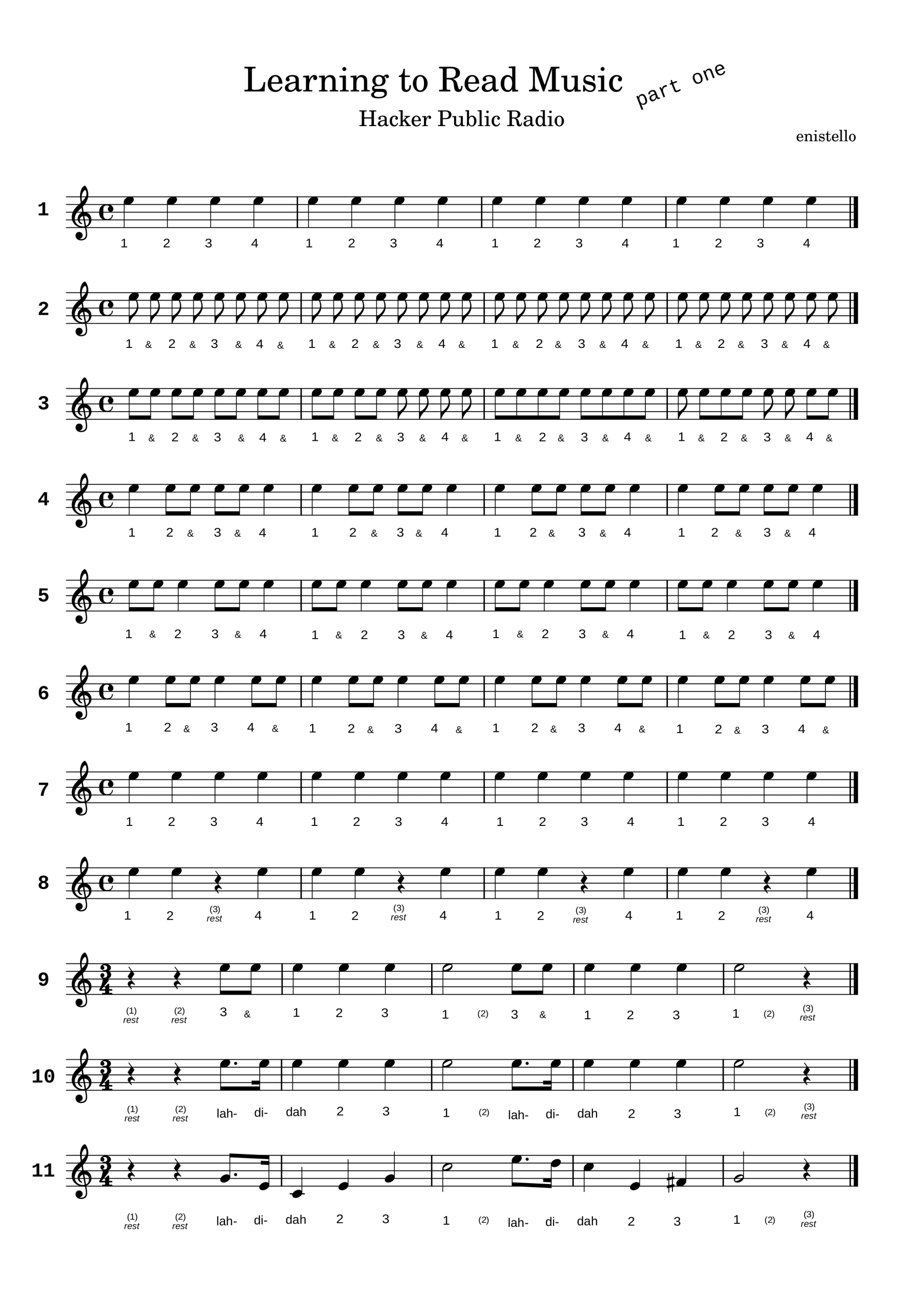
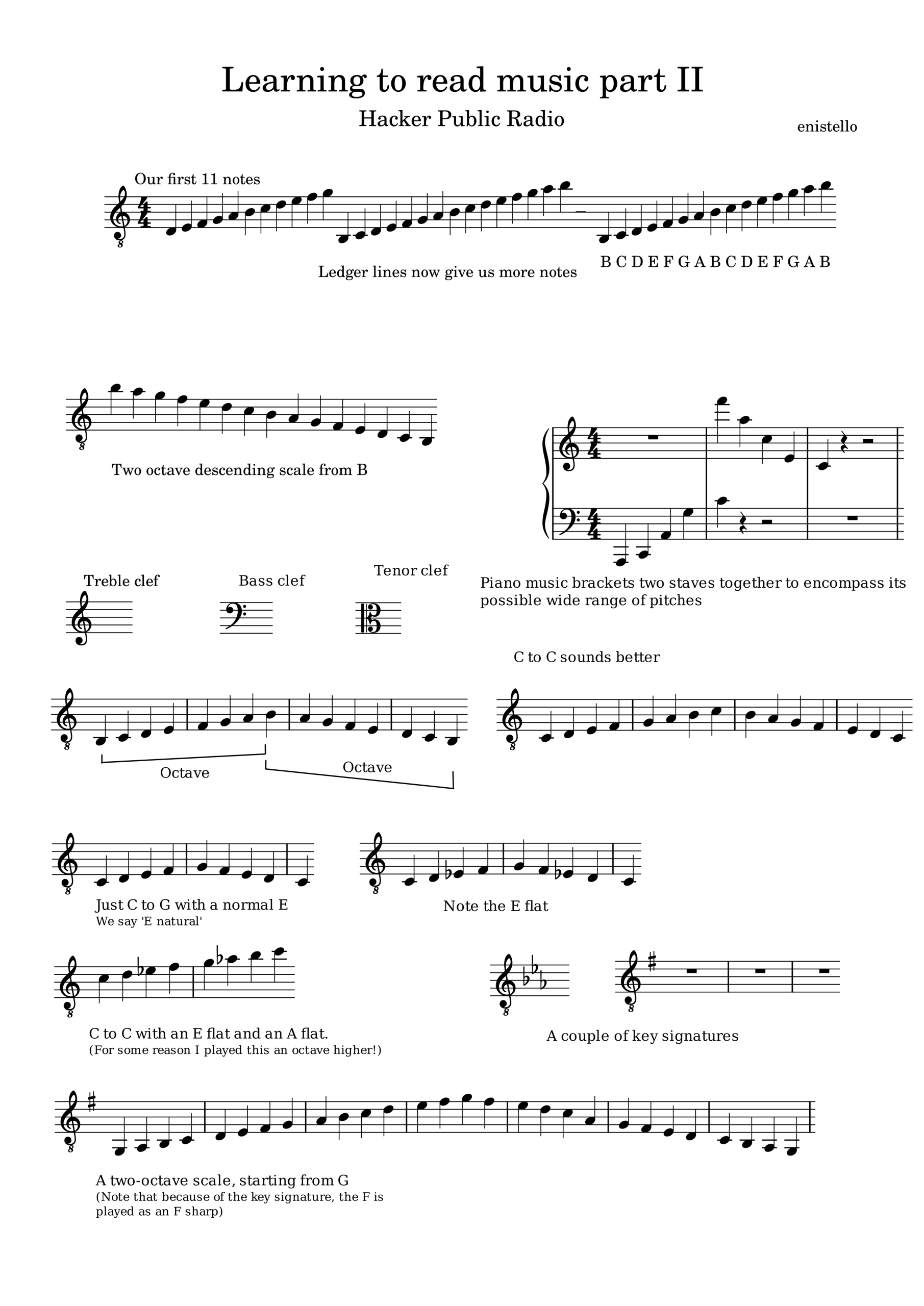
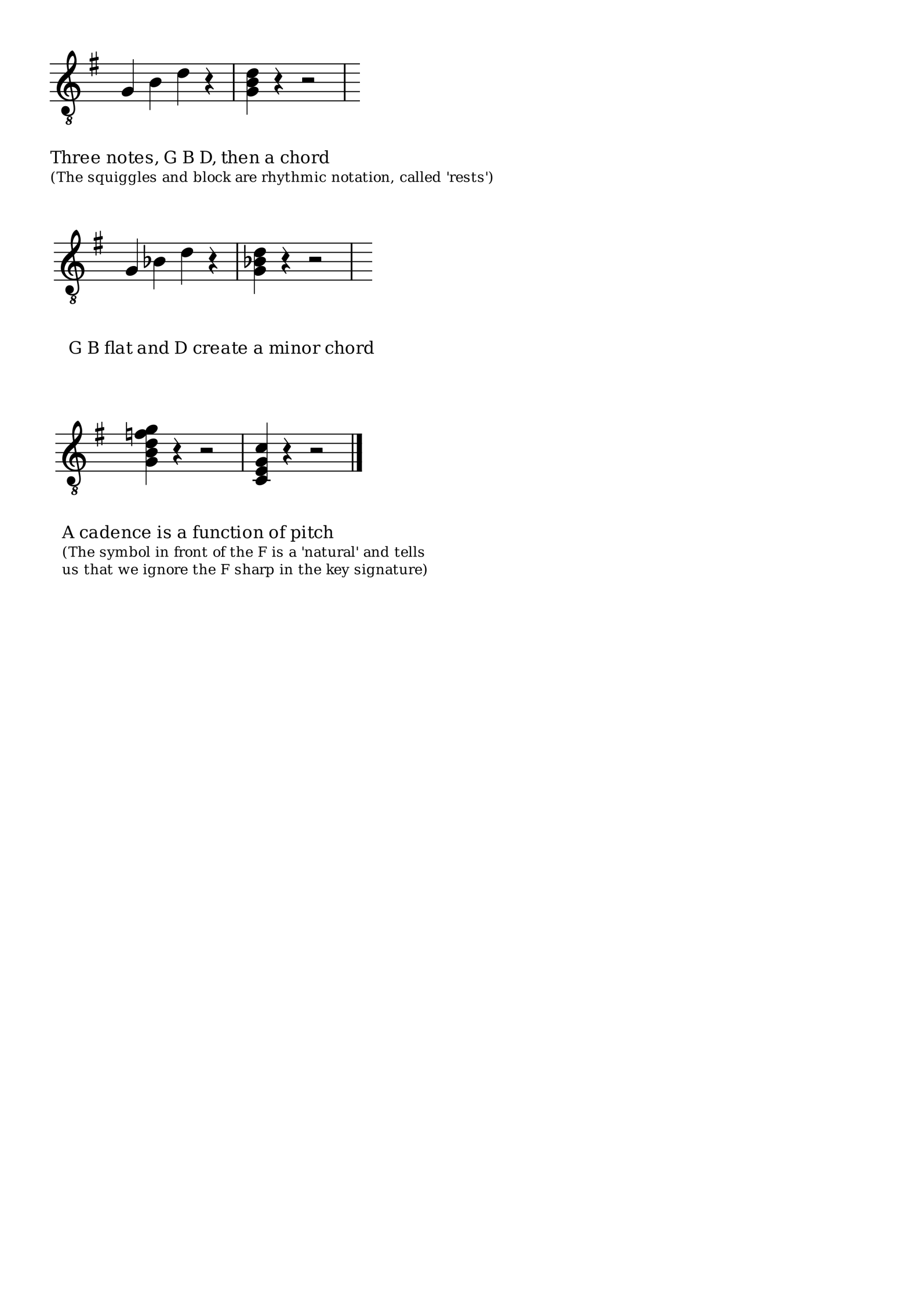
Many years later, when I was scratching my head to think of the subject for an episode of Hacker Public Radio that I could record, I dusted off the manuscript paper and unboxed the trusty crumhorn to produce a couple of episodes on the subject. I split the tutorial into two parts, the first on rhythm, the second on pitch. You can hear the episodes here and here.
Rhythm is the most important aspect of music. Play any well-know melody with each note or rest re-rendered to random length, and no one will recognise it. But tap the rhythm to, say, La Marseillaise, and almost everyone would be able to identify it. Apart from anyone from a nation where few have passports, and fewer still trouble to venture overseas. Y’all know who you are.
Rhythm in written music is denoted by the shape of the figures on the page. In simple terms, the more ink there is on or around a dot or squiggle, the shorter the time interval between notes or the gaps between notes, which are called rests. Music is rendered on a stave or staves (where a single stave is usually five parallel lines) where the higher-pitched notes appear higher up, lower-pitched notes appear lower down. Armed with those two facts, the rudiments of music can be gleaned in the space of an hour, and a little practice. Add a smattering of other knowledge covering things like time signatures and phrasing, some jargon and a few words of (typically) Italian, and that’s all there is to it.
There is a myth that learning to read music is hard. Untrue. It takes some effort, like anything worthwhile. The other common myth is that by learning to read music, the mana, creativity, or soul of the musician is compromised. You hear a lot of this in the folk and rock communities. It is, of course, unutterable cobblers only peddled by people who can’t be arsed to learn, or consider themselves too stylishly, indefinably, cool, or who are too busy getting pissed to turn their minds to it.
Edge cases:
- There’s a particular type of dyslexia (I’ve only come across once in a single student) that prevents some from reading music easily. Sufferers get a pass.
- You are 99.99% unlikely to be tone deaf. People with real tone deafness can’t hear any modulation in pitch of, for instance, their own voice. I’ve never encountered anyone truly tone deaf.
The Hacker Public Radio episodes came with some show notes and crib sheets, which are also here for part one, and here and here for part two. Episode one of Learning To Read Music is on rhythm. Episode two is on pitch.